100 Quotes by Abraham Lincoln and the History Behind Them
Abraham Lincoln's most famous quotes, along with fascinating historical context behind each one.
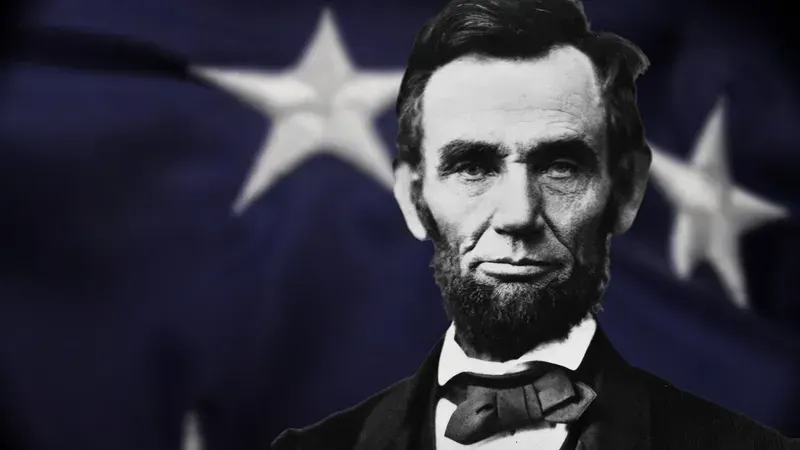
Abraham Lincoln is one of the most quoted presidents in American history. His words have been preserved in speeches, debates, letters, and public addresses, continuing to inspire people more than a century and a half after they were first spoken.
Many of Lincoln's quotes became defining statements on freedom, democracy, leadership, and perseverance. Others emerged during some of the most challenging moments in American history, including the Civil War and the fight to preserve the Union. His remarks are still referenced today in politics, education, business, and everyday life.
This collection brings together 100 of Abraham Lincoln's most famous quotes, along with fascinating historical context behind each one.
1. "Whatever you are, be a good one."
This is one of Lincoln's most widely shared quotes today. However, historians have not found a definitive source in Lincoln's writings or speeches, making its authenticity uncertain.
2. "I am a slow walker, but I never walk back."
This quote perfectly reflects Lincoln's leadership style during the Civil War—careful, deliberate, and often criticized as slow, yet remarkably persistent once he committed to a decision.
3. "Nearly all men can stand adversity, but if you want to test a man's character, give him power."
Lincoln wrote this in a letter in 1864. It remains one of the most quoted observations about leadership and human nature.
4. "Always bear in mind that your own resolution to succeed is more important than any other."
Lincoln's rise from frontier poverty to the presidency makes this quote especially compelling. He had less than a year of formal schooling and was largely self-educated.
5. "You cannot escape the responsibility of tomorrow by evading it today."
The quote reflects Lincoln's belief that difficult decisions should be confronted directly, a philosophy that shaped many of his wartime policies.
6. "The best way to destroy an enemy is to make him a friend."
Lincoln often appointed former political rivals to important positions. This approach inspired the famous book Team of Rivals.
7. "Those who deny freedom to others deserve it not for themselves."
Lincoln expressed this idea during the national debate over slavery years before issuing the Emancipation Proclamation.
8. "My concern is not whether God is on our side; my greatest concern is to be on God's side."
Lincoln often spoke about humility and moral responsibility rather than claiming divine certainty for political positions.
9. "Be sure you put your feet in the right place, then stand firm."
This quote is frequently used in leadership and business books because it combines careful judgment with unwavering commitment.
10. "I have always found that mercy bears richer fruits than strict justice."
During the Civil War, Lincoln became known for reviewing soldiers' death sentences and often granting pardons.
11. "Leave nothing for tomorrow which can be done today."
Lincoln included this advice in notes prepared for a lecture on the practice of law around 1850.
12. "The better part of one's life consists in his friendships."
Lincoln wrote this in a personal letter, revealing a warmer and more personal side than his public speeches often showed.
13. "When I do good, I feel good. When I do bad, I feel bad. That's my religion."
This is one of Lincoln's most memorable statements about morality, emphasizing actions over labels.
14. "Character is like a tree and reputation like a shadow."
Lincoln believed reputation follows character—not the other way around—making this one of his most enduring observations about integrity.
15. "I will prepare and someday my chance will come."
The quote captures Lincoln's lifelong habit of self-education, reading books whenever he could find them.
16. "I am not bound to win, but I am bound to be true."
Lincoln expressed this sentiment during the Civil War when the outcome of the conflict was far from certain.
17. "With public sentiment, nothing can fail. Without it, nothing can succeed."
Lincoln understood the power of public opinion better than most politicians of his era.
18. "You have to do your own growing no matter how tall your grandfather was."
Lincoln often emphasized personal responsibility and self-improvement rather than inherited status.
19. "We can complain because rose bushes have thorns, or rejoice because thorn bushes have roses."
This remains one of Lincoln's most frequently quoted reflections on optimism and perspective.
20. "Commitment is what transforms a promise into reality."
Although widely attributed to Lincoln, historians debate whether this quote can be traced to a verified Lincoln source.
21. “As I would not be a slave, so I would not be a master. This expresses my idea of democracy.”
This is perhaps Lincoln's clearest one-sentence definition of democracy and is frequently cited in discussions of equality and freedom.
22. “I have never had a feeling politically that did not spring from the sentiments embodied in the Declaration of Independence.”
Lincoln spoke these words just days before becoming president while traveling to Washington amid assassination threats.
23. “Important principles may and must be inflexible.”
This was one of the last public statements Lincoln made before his assassination three days later.
24. “I wish to do justice to all.”
Though simple, this quote captures the moral philosophy that guided much of Lincoln's political career.
25. “The true rule, in determining to embrace or reject anything, is not whether it have any evil in it, but whether it have more of evil than of good.”
Lincoln often approached difficult decisions pragmatically, weighing outcomes rather than seeking perfection.
26. “Let bygones be bygones; let past differences as nothing be.”
Lincoln believed political coalitions required forgiveness and cooperation among former rivals.
27. “It really hurts me very much to suppose that I have wronged anybody on earth.”
Even during heated debates, Lincoln remained deeply concerned about personal integrity and fairness.
28. “The inclination to exchange thoughts with one another is probably an original impulse of our nature.”
Lincoln viewed communication and the sharing of ideas as essential drivers of human progress.
29. “I have found that it is not entirely safe, when one is misrepresented under his very nose, to allow this misrepresentation to go uncontradicted.”
Lincoln understood the dangers of misinformation long before the age of social media.
30. “I have found that when one is embarrassed, usually the shortest way to get through with it is to quit talking or thinking about it, and go at something else.”
This practical advice reflects Lincoln's habit of focusing on productive action rather than dwelling on setbacks.
31. “In giving freedom to the slave, we assure freedom to the free.”
Lincoln argued that ending slavery strengthened liberty for the entire nation, not just enslaved people.
32. “We shall nobly save, or meanly lose, the last best hope of earth.”
Lincoln often referred to the United States as a test of democratic government for the world.
33. “The world has never had a good definition of the word liberty.”
Lincoln followed this quote by explaining that different groups often use the same word while meaning very different things.
34. “Four score and seven years ago our fathers brought forth on this continent, a new nation, conceived in Liberty, and dedicated to the proposition that all men are created equal.”
The Gettysburg Address is only about 272 words long, yet it became one of the most influential speeches in history.
35. “That government of the people, by the people, for the people, shall not perish from the earth.”
This phrase became one of the most famous definitions of democratic government ever written.
36. “A house divided against itself cannot stand.”
Lincoln borrowed this imagery from the Bible to describe the nation's conflict over slavery.
37. “This government cannot endure permanently half slave and half free.”
The speech was controversial because many believed Lincoln was predicting a civil war.
38. “The dogmas of the quiet past are inadequate to the stormy present.”
Lincoln urged Americans to adapt to changing circumstances during the Civil War rather than cling to old assumptions.
39. “Fellow-citizens, we cannot escape history.”
Lincoln reminded lawmakers that future generations would judge how they responded to the crisis of slavery and national division.
40. “The fiery trial through which we pass will light us down, in honor or dishonor, to the latest generation.”
Lincoln believed the Civil War would determine how future generations remembered the United States and its commitment to freedom.
41. “I do the very best I know how—the very best I can; and I mean to keep doing so until the end.”
Lincoln reportedly said this while facing intense criticism from both abolitionists and political opponents during the Civil War.
42. “If slavery is not wrong, nothing is wrong.”
Historians often cite this as Lincoln's clearest personal statement on the morality of slavery.
43. “I claim not to have controlled events, but confess plainly that events have controlled me.”
Lincoln acknowledged that the Civil War forced decisions he never expected to make when he entered office.
44. “The struggle of today is not altogether for today—it is for a vast future also.”
Lincoln frequently framed the Civil War as a test that would affect generations yet unborn.
45. “Adhere to your purpose and you will soon feel as well as you ever did.”
Lincoln wrote this while struggling with one of the most difficult periods of his personal life.
46. “Most folks are about as happy as they make up their minds to be.”
Despite questions about its exact origin, it remains one of the most quoted Lincoln sayings on happiness.
47. “The ballot is stronger than the bullet.”
Lincoln emphasized that democratic change should come through elections rather than violence.
48. “No man is good enough to govern another man without that other's consent.”
This quote became one of Lincoln's strongest arguments against slavery and arbitrary power.
49. “Whenever I hear anyone arguing for slavery, I feel a strong impulse to see it tried on him personally.”
The quote illustrates Lincoln's ability to make a powerful moral point with sharp humor.
50. “The legitimate object of government is to do for a community of people whatever they need done, but cannot do at all, or cannot so well do for themselves.”
This statement is still cited in debates about the proper role of government.
51. “Books serve to show a man that those original thoughts of his aren't very new after all.”
Lincoln was an avid reader who taught himself law largely through books.
52. “The philosophy of the schoolroom in one generation will be the philosophy of government in the next.”
The quote is popular in education circles despite questions about authenticity.
53. “I don't know who my grandfather was; I am much more concerned to know what his grandson will be.”
Whether authentic or not, the quote reflects Lincoln's emphasis on individual achievement over family status.
54. “Common looking people are the best in the world: that is the reason the Lord makes so many of them.”
Lincoln often used humor and self-deprecation to connect with ordinary Americans.
55. “I laugh because I must not cry, that is all, that is all.”
Lincoln frequently used storytelling and humor as a coping mechanism during immense personal and political stress.
56. “When you reach the end of your rope, tie a knot and hang on.”
This is one of the most repeated perseverance quotes associated with Lincoln.
57. “I destroy my enemies when I make them my friends.”
Lincoln's approach to political opponents was often surprisingly conciliatory for his era.
58. “Public sentiment is everything. With public sentiment, nothing can fail; without it, nothing can succeed.”
Lincoln believed public opinion was ultimately more powerful than laws or political institutions.
59. “A capacity and taste for reading gives access to whatever has already been discovered by others.”
Lincoln credited reading as one of the most important factors in his own education.
60. “The shepherd drives the wolf from the sheep's throat, for which the sheep thanks the shepherd as a liberator.”
Lincoln used this analogy to illustrate how different groups can view liberty in completely opposite ways.
61. “The world will little note, nor long remember what we say here, but it can never forget what they did here.”
Ironically, this became one of the most remembered lines in American history, despite Lincoln suggesting the speech itself might be forgotten.
62. “It is for us the living, rather, to be dedicated here to the unfinished work.”
Lincoln shifted the focus from honoring the dead to challenging the living to continue their mission.
63. “That these dead shall not have died in vain.”
This phrase became a defining expression of sacrifice and national purpose during wartime.
64. “That this nation, under God, shall have a new birth of freedom.”
The phrase “new birth of freedom” reflected Lincoln's belief that the Civil War was transforming the meaning of the American republic.
65. “Fondly do we hope—fervently do we pray—that this mighty scourge of war may speedily pass away.”
Lincoln delivered these words just weeks before the Civil War ended.
66. “With malice toward none; with charity for all.”
This is one of Lincoln's most famous calls for national reconciliation after years of war.
67. “Let us strive on to finish the work we are in.”
Lincoln emphasized rebuilding the nation rather than celebrating victory.
68. “To bind up the nation's wounds.”
This phrase is engraved on memorials and frequently cited during periods of national healing.
69. “To care for him who shall have borne the battle and for his widow and his orphan.”
This statement later inspired the mission of the United States Department of Veterans Affairs.
70. “Both read the same Bible and pray to the same God, and each invokes His aid against the other.”
Lincoln acknowledged the tragic reality that Americans on both sides of the Civil War believed their cause was righteous.
71. “The Almighty has His own purposes.”
Lincoln often spoke with humility about human understanding and divine will.
72. “Neither party expected for the war the magnitude or the duration which it has already attained.”
By 1865, the Civil War had become far deadlier and longer than almost anyone predicted in 1861.
73. “The occasion is piled high with difficulty, and we must rise with the occasion.”
Lincoln used this line to encourage Americans to adapt to extraordinary challenges rather than retreat from them.
74. “As our case is new, so we must think anew and act anew.”
This remains one of Lincoln's most frequently quoted statements about innovation and change.
75. “We cannot escape history.”
Lincoln reminded lawmakers that future generations would judge their actions during the nation's crisis.
76. “The strongest bond of human sympathy, outside of the family relation, should be one uniting all working people.”
Lincoln often expressed admiration for the dignity and value of labor.
77. “Labor is prior to, and independent of, capital.”
Lincoln argued that workers create wealth and opportunity before capital can exist.
78. “Capital is only the fruit of labor.”
This quote is frequently referenced in discussions about economics and workers' rights.
79. “The prudent, penniless beginner in the world labors for wages awhile, saves a surplus, and at length hires another new beginner to help him.”
Lincoln viewed social mobility and self-improvement as central strengths of American society.
80. “I would rather be a little nobody, then to be an evil somebody.”
Despite its popularity, historians have not verified that Lincoln actually said or wrote these exact words.
81. “I do not think much of a man who is not wiser today than he was yesterday.”
Whether authentic or not, the quote reflects Lincoln's lifelong commitment to learning and self-improvement.
82. “Give me six hours to chop down a tree and I will spend the first four sharpening the axe.”
This is one of the most cited business and productivity quotes associated with Lincoln, despite its uncertain origin.
83. “I can make a general in five minutes but a good horse is hard to replace.”
Lincoln loved horses and was known as an accomplished rider long before entering politics.
84. “My best friend is a person who will give me a book I have not read.”
Lincoln's passion for reading helped him become a lawyer despite having little formal education.
85. “I don't like that man. I must get to know him better.”
The quote captures Lincoln's tendency to reserve judgment and seek understanding before criticizing others.
86. “Tact is the ability to describe others as they see themselves.”
The quote remains popular in leadership and communication training programs.
87. “If I were two-faced, would I be wearing this one?”
Lincoln often joked about his appearance and used self-deprecating humor to connect with audiences.
88. “I have been driven many times to my knees by the overwhelming conviction that I had nowhere else to go.”
The quote reflects the immense pressure Lincoln experienced while leading the nation through civil war.
89. “My great concern is not whether you have failed, but whether you are content with your failure.”
The quote remains popular among coaches, teachers, and motivational speakers.
90. “Things may come to those who wait, but only the things left by those who hustle.”
Despite its popularity, there is no strong evidence Lincoln actually said this.
91. “The better part of one's life consists of his friendships.”
Speed was one of Lincoln's closest lifelong friends and a trusted confidant.
92. “Am I not destroying my enemies when I make friends of them?”
This quote perfectly summarizes Lincoln's reputation for reconciliation and political magnanimity.
93. “Whenever I hear anyone arguing for slavery, I feel a strong impulse to see it tried on him personally.”
This remains one of Lincoln's sharpest and most memorable arguments against slavery.
94. “No man has a good enough memory to be a successful liar.”
The quote is frequently cited in discussions about honesty and integrity.
95. “If friendship is your weakest point, then you are the strongest person in the world.”
This quote appears widely online but lacks documentation in Lincoln's known writings.
96. “You can fool all the people some of the time, and some of the people all the time, but you cannot fool all the people all the time.”
This is arguably the most famous quote associated with Lincoln that lacks definitive proof of authorship.
97. “Those who look for the bad in people will surely find it.”
The quote aligns with Lincoln's reputation for empathy and generosity toward others.
98. “Towering genius disdains a beaten path.”
Lincoln was only 28 years old when he delivered this speech, one of the earliest major addresses of his career.
99. “The probability that we may fail in the struggle ought not to deter us from the support of a cause we believe to be just.”
Lincoln frequently emphasized moral conviction even when success was uncertain.
100. “Let us have faith that right makes might, and in that faith, let us, to the end, dare to do our duty as we understand it.”
The Cooper Union Address helped transform Lincoln from a regional politician into a serious presidential contender. Many historians consider it one of the speeches that paved the way for his election later that year.

